An office location is experienced every day through the way people reach it.
For employees, transport affects commuting options. For visitors, it affects accessibility and first impressions. For employers, it can influence the geographic reach of recruitment and the practical ease of bringing teams and clients together.
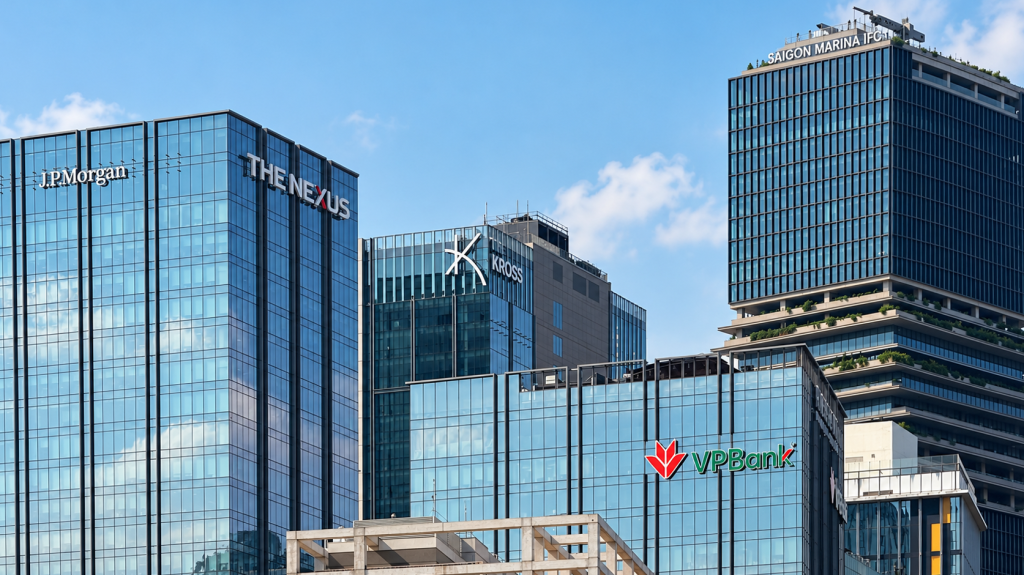
The Kross sits in the Ba Son Area which is a particularly connected part of central Ho Chi Minh City. The purpose of this article is not simply to repeat where the building is located, but to examine why the combination of metro, road, riverfront and CBD connections matters to workplace strategy.
The Rise of Transit-Oriented Business Locations
Corporate real estate decisions increasingly consider how a building connects to the wider city. A central address remains valuable, but accessibility is becoming a more multidimensional question: Can employees arrive by different modes? Can clients reach the building without navigating a complicated route? Can teams move between business districts efficiently?
For large occupiers, these questions can influence the practical catchment of the workplace. Public transport can provide an additional commuting option, while major roads connect the office to other districts and the airport.
This does not make transit the only criterion for selecting an office. It makes connectivity one part of a broader site-selection framework.
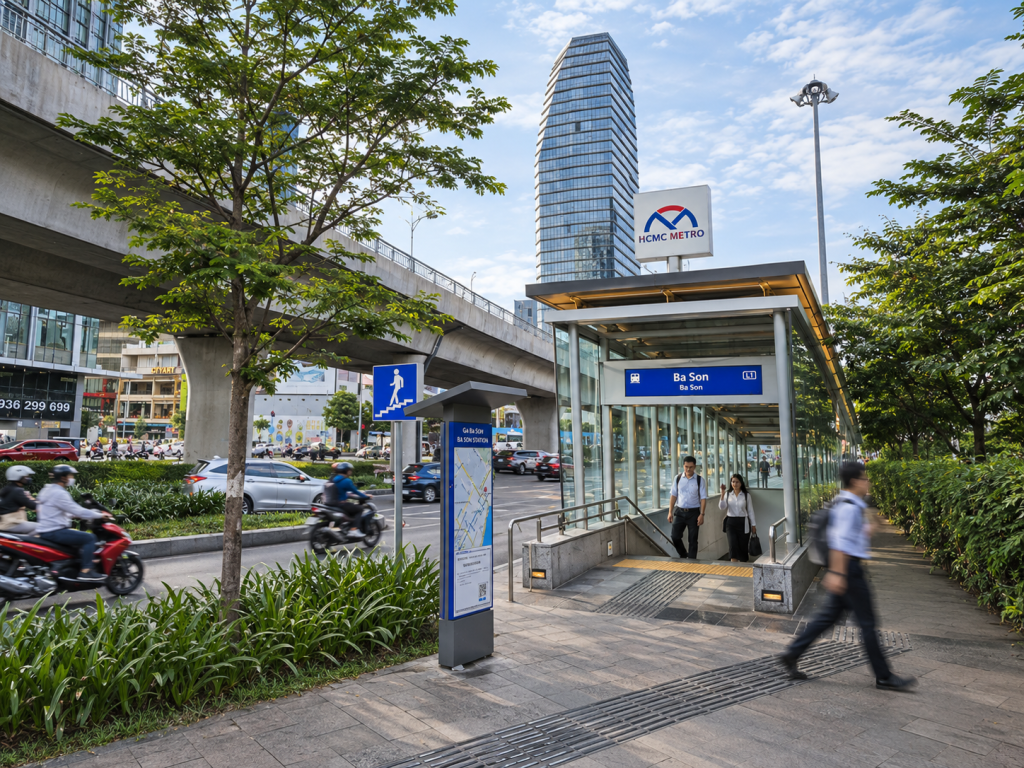
Ba Son Metro Station: 50 Metres From The Kross
The Kross is approximately 50 metres, or about a one-minute walk, from Ba Son Metro Station.
This places Metro Line 1 within immediate walking distance of the building and gives employees and visitors another way to reach the workplace. For a corporate occupier, proximity matters because the value of public transport depends partly on the last stretch between the station and the office.
Here, that final connection is short and straightforward. The metro therefore becomes part of the building’s everyday accessibility rather than a transport option that still requires a separate road journey.
Ba Son Bridge: A Direct Link to Thu Thiem
Ba Son Bridge is approximately 50 metres from The Kross, creating a direct road connection toward Thu Thiem.
Under normal traffic conditions, Thu Thiem is around three minutes from the building. Actual journey times vary with traffic, so the figure should be treated as an approximate reference rather than a guaranteed travel time.
For businesses whose teams or clients move between District 1 and Thu Thiem, this connection is particularly relevant. The Kross allows a company to maintain a District 1 address while remaining closely connected to the emerging business environment across the river.
District 1 ↔ Thu Thiem
District 1 and Thu Thiem represent two different but increasingly connected parts of central Ho Chi Minh City.
District 1 provides an established concentration of corporate offices, financial services, hospitality, retail and civic destinations. Thu Thiem adds a major area of ongoing urban and commercial development. The ability to move between the two is therefore relevant to companies whose operations, clients or employees are distributed across the central city.
The Kross sits between these environments. Its location allows occupiers to access the established CBD while maintaining a direct connection to Thu Thiem through Ba Son Bridge.
Bach Dang Wharf & the Riverfront
Bach Dang Wharf is approximately 500 metres from The Kross, placing the building close to one of central Ho Chi Minh City’s key riverfront destinations.
For the workplace, this adds another dimension to the location. Employees and visitors are not limited to the immediate office environment; the surrounding area also provides access to hospitality, retail, leisure and riverfront amenities.
Where waterbus services are relevant to a particular occupier, route availability and operating schedules should be checked separately. The broader point is that The Kross sits within a dense central-city mobility and amenity network rather than an isolated office cluster.
What Better Connectivity Means for Employers
Connectivity can influence workplace strategy in practical ways.
A building that is easy to reach by multiple modes can provide employees with more commuting options. It can also make it easier for clients and visitors to reach meetings, while helping regional teams move between offices, business districts and the airport.
For a GCC or other large corporate operation, accessibility can also form part of talent strategy. A workplace that is difficult to reach can narrow the practical recruitment catchment. A centrally connected workplace can give employees more ways to reach the same destination.
These are operational considerations rather than promises of specific productivity outcomes, and they should be assessed alongside the company’s own commuting patterns and workforce data.
The Kross as a Connected Workplace
The location proposition at The Kross is built around several connections working together.
Ba Son Metro Station is approximately 50 metres away. Ba Son Bridge is approximately 50 metres away, connecting the building to Thu Thiem. Bach Dang Wharf is around 500 metres away, while Tan Son Nhat International Airport is approximately 30 minutes away subject to traffic.
Taken together, these connections give occupiers access to public transport, major roads, the riverfront, the CBD and the airport within a compact central-city setting.
Location determines how people reach the workplace. The floorplate determines how the organisation can operate once they arrive.
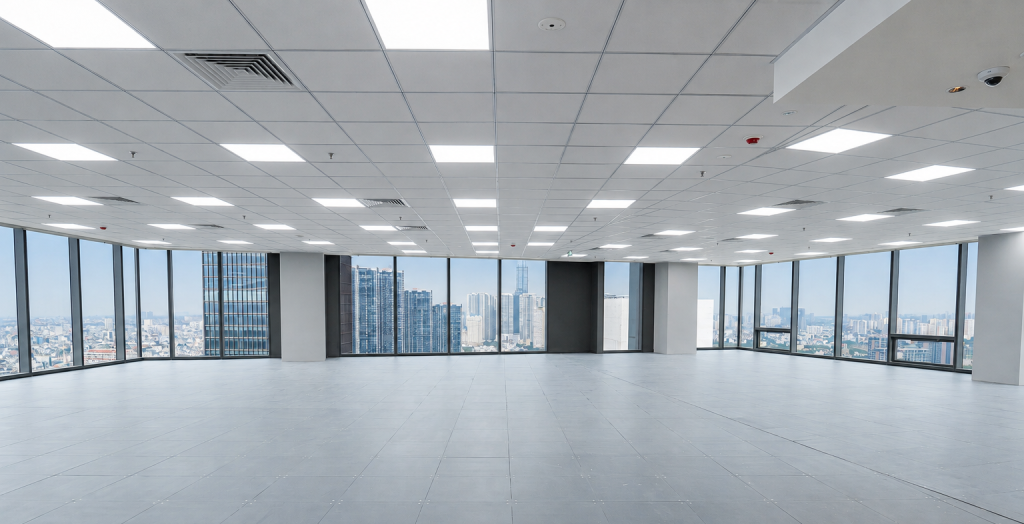
For companies evaluating The Kross, the next step is to move from the map to the building itself. Review the typical floorplate dimensions, planning possibilities and technical specifications to understand how the workplace could be configured around your team.
Discover The Kross Floor Plans
Related Reading
Continue exploring the VIFC & Corporate Expansion series: The Definitive Guide to HCMC’s VIFC & Corporate Expansion, Why Multinational GCCs Are Expanding in Ho Chi Minh City, and LEED Gold & WELL: What ESG Standards Mean for MNC Occupiers.