Finding the right office space for rent is not just about comparing rental rates and location. An ill-considered decision can expose your business to unexpected costs, inefficient use of space, or difficulties expanding later on. That is why companies need to carefully assess the floor area, total leasing cost, building quality and contract terms before making a decision.
This is especially true when choosing office space in central Ho Chi Minh City, where businesses must balance transport connectivity, brand image, operational quality and long-term budget. The 10-point checklist below will help you compare options systematically, identify what to verify, and select a space that truly fits your needs.
1. Define Your Space Requirements and Office Size
Before you start looking for office space for rent, your company needs to define its current headcount, growth plans for the next 2–3 years, and how the workspace will be organized.
Factors to consider include:
- The number of fixed versus flexible workstations.
- Meeting rooms, management offices and client-reception areas.
- Collaboration areas, pantries and other functional zones.
- Room to expand or reconfigure the layout in the future.
The amount of space you need depends on seating density, the share of common areas, and the nature of your business. A benchmark of 6–10 sqm per employee can be a rough guide for some business models, but it is not a standard that applies to every company.
Rather than relying only on an average area per employee, check the actual floor plan layout to confirm it can support the functions you need. Defining your requirements upfront also helps rule out spaces that are either oversized or too small for actual use.
2. Calculate the Total Cost of Leasing Office Space
The quoted rental rate does not reflect the full budget your business needs to prepare. When comparing office space for rent, factor in recurring rental costs, operating expenses and upfront investment.
Costs to verify include:
- Rent and the management/service fee.
- VAT and any fees specified in the quotation or contract.
- Electricity, air-conditioning and after-hours usage charges.
- Parking fees for staff and visiting clients.
- Interior design, fit-out and finishing costs.
- Moving costs, IT infrastructure setup and workplace technology.
Prepare a budget for the entire expected lease term rather than comparing only the monthly rental rate. A lower headline rent is not necessarily the more economical choice if it comes with higher fit-out or operating costs.
To compare accurately, confirm which fees are already included in the rent, which are billed separately, and which costs may change during the lease term.
3. Choose a Location That Works for Both Staff and Clients
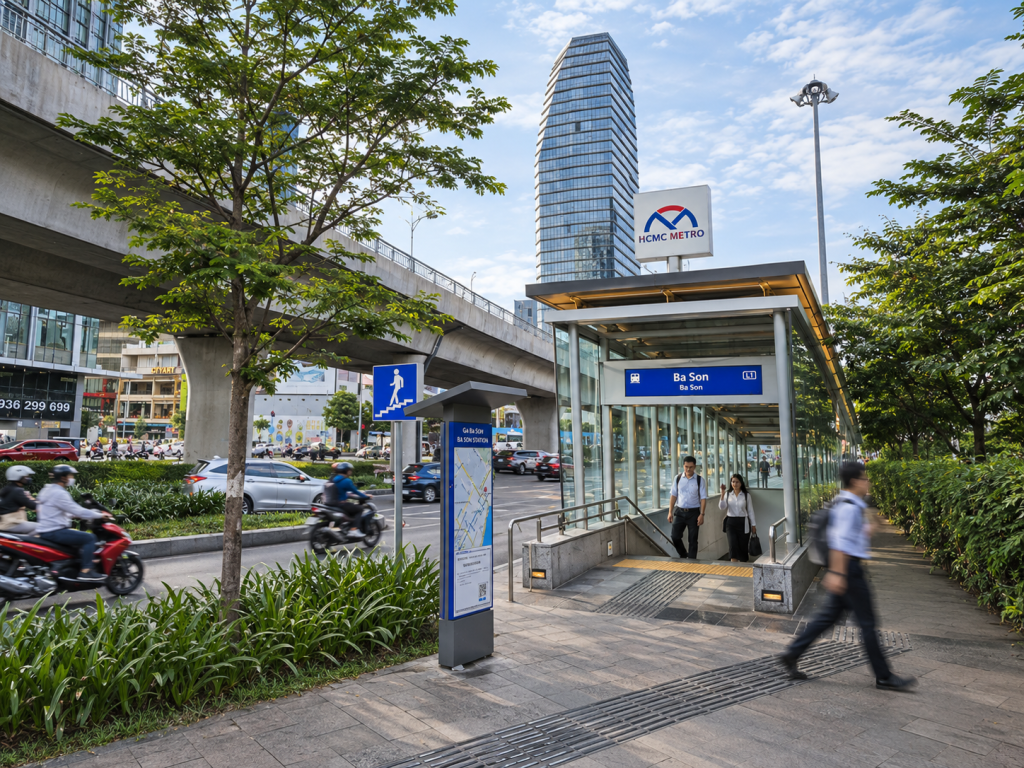
An office’s location affects how easily clients can reach you, how long staff spend commuting, and the day-to-day working experience.
When assessing a location, consider:
- Travel time during peak hours.
- Connectivity to public transport routes.
- Accessibility by motorbike and car.
- Parking availability and client drop-off arrangements.
- Nearby amenities such as restaurants, banks, hotels and essential services.
For businesses that regularly meet clients, partners or international counterparts, a central location can offer an advantage in connectivity and corporate image. That said, the final choice still needs to fit your budget, workforce profile and operating model.
If your company is prioritizing central Ho Chi Minh City, take a closer look at [office locations for rent in central HCMC] to compare connectivity, the character of each area, and how well they match your operational needs.
4. Assess the Building’s Quality and Operational Capability
Office quality is not determined by exterior design alone. A building’s technical systems and management processes have a direct impact on business continuity.
Before choosing, your company should look into:
- The elevator system and its capacity during peak hours.
- The air-conditioning system and temperature control.
- Backup power supply and contingency plans.
- Fire safety and fire-fighting systems.
- Telecom and internet infrastructure, and supported network providers.
- Security, reception and visitor-management procedures.
- The building management company and its maintenance request process.
For Grade A office space, businesses should evaluate construction quality, service standards and operational stability together. An attractive space can still be inconvenient if its technical systems or management services fall short of actual needs.
Green building certifications can also be a useful reference point when assessing a building. However, companies should look at the certification’s scope and relevance to their goals, rather than relying on the certification name alone.
For a closer look at these evaluation criteria, see [this guide to Grade A office space] before shortlisting buildings to visit.
5. Check the Leasable Area and Layout Flexibility
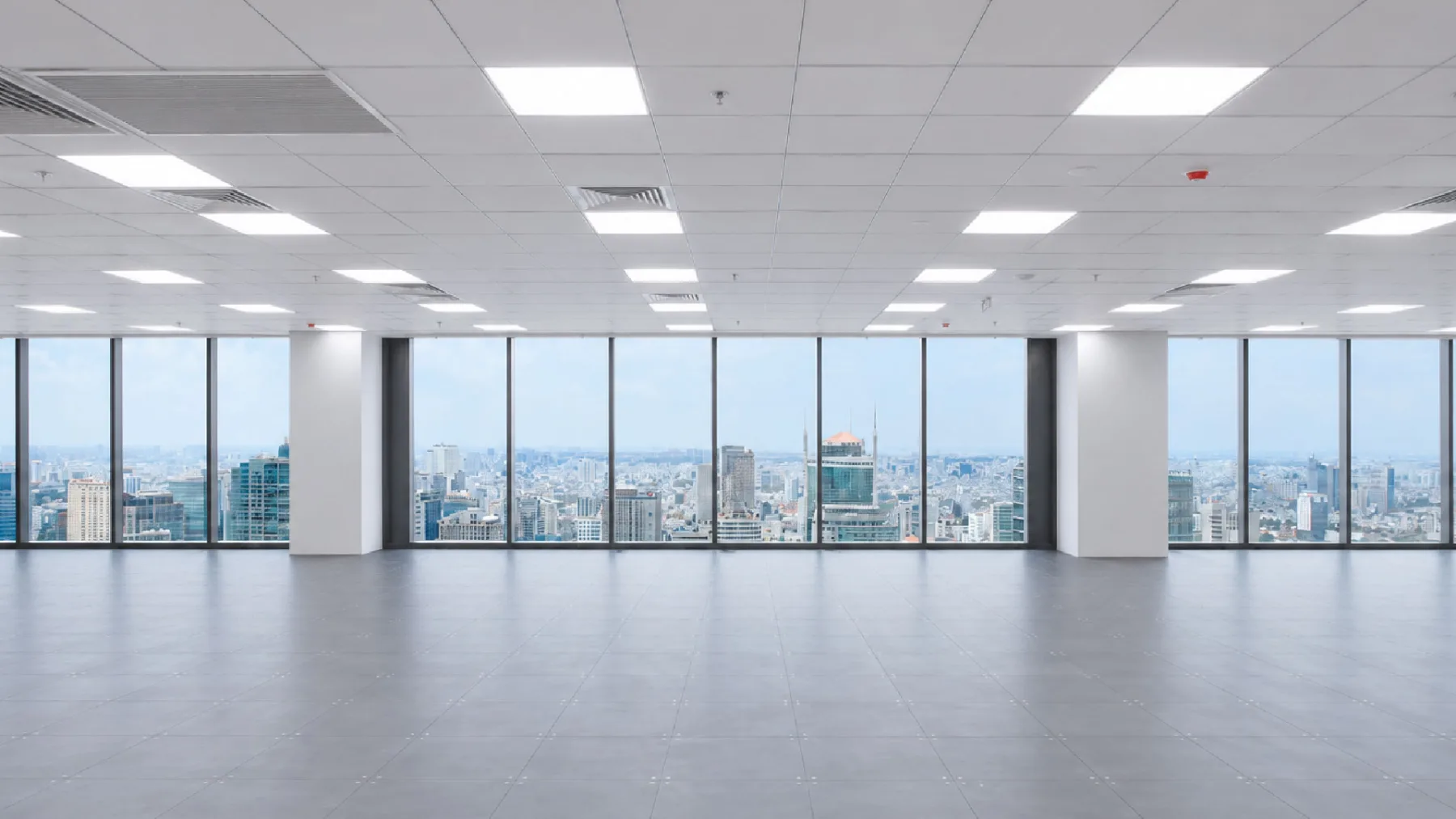
The area stated in a quotation does not always match the area you can actually use. Companies should verify how the leasable area is calculated and inspect the space before finalizing a design plan.
Key factors include:
- The billable area versus the actual usable area.
- The position of columns, the lift core and other technical zones.
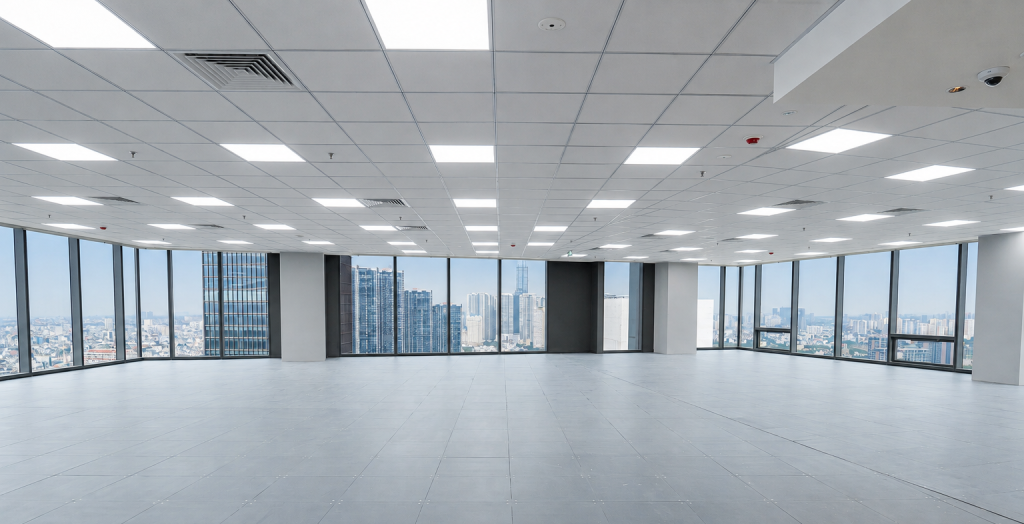
- Ceiling height and the raised/technical flooring system.
- Access to natural light and views.
- The location of power, air-conditioning and other technical connection points.
- How easily the space can accommodate workstations, meeting rooms and functional zones.
A well-shaped floor plate with minimal structural constraints and suitable infrastructure can help your business use the space more efficiently.
Before signing, compare the floor plan against your actual layout needs and technical requirements. If fit-out work is required, confirm in advance any technical system limitations, construction timelines and the building’s approval process.
6. Review the Lease Agreement Terms
The lease agreement defines your rights, obligations and conditions of use for the entire lease term. Companies need to clarify the key terms before signing.
Checklist items to review:
- Lease term and renewal conditions.
- Deposit amount, payment schedule and refund conditions.
- The mechanism for rent adjustments during the lease term.
- Any rent-free period for fit-out work, if applicable.
- Rights and responsibilities for repairs and renovations.
- Conditions for early termination.
- Rules on assignment or subletting, if permitted.
- Handover and return obligations at the end of the lease.
These terms should be confirmed in writing, especially anything related to cost, timing and each party’s responsibilities. Companies should also clarify situations that could lead to disputes, such as delayed handover, changes in area, or conditions not being met as agreed.
For high-value or complex lease agreements, it is advisable to consult a legal expert before signing.
7. Verify Potential Additional Costs
Beyond the recurring costs of leasing office space, some charges only arise when a business uses services outside the standard scope or carries out specific work.
Ask specifically about:
- Charges for after-hours air-conditioning or other utilities.
- Fees for moving materials and using the freight elevator.
- Construction fees, contractor registration and site-management requirements.
- Costs for repairs, restoration or returning the space to its original condition.
- Any additional service fees set by building management.
Don’t rely on verbal information alone. Request a fee schedule or written confirmation to use as a basis for budgeting and comparing between options.
Distinguish between costs that can be predicted in advance and those that only apply in specific situations. Understanding when each cost applies helps your business plan its budget and avoid unexpected expenses.
8. Check Legal Documentation and Conditions of Use
Before signing a contract, companies need to verify the landlord’s legal standing, the right to lease the space, and the legal conditions related to using the office.
Items to check, depending on the transaction, include:
- The landlord’s legal information and authority to sign the contract.
- Documentation proving the right to lease or operate the space.
- Conditions related to safety and fire prevention.
- Whether the address can be used as a registered head office or business location, as needed.
- Rules on renovation, signage and other building activities.
Specific requirements can vary depending on the type of business and intended use. Companies should verify documentation with the landlord and consult the appropriate expert when needed, rather than relying solely on the building’s marketing materials.
9. Conduct an On-Site Survey Before Deciding
Information in drawings and marketing materials cannot fully substitute for an on-site visit. A well-timed tour can help you assess factors that are hard to gauge from images alone.
During your visit, pay attention to:
- Elevator traffic during peak hours.
- The condition of the parking area and entrances/exits.
- Noise levels in the work area.
- Lighting, temperature and ventilation conditions.
- Mobile signal quality and internet connectivity.
- Visitor-reception procedures, goods handling and how operational requests are handled.
If possible, visit at different times of day and ask the building management team questions directly. Companies should also request to inspect the relevant technical systems before finalizing their decision.
Keep a record of any unanswered questions and request written confirmation of important information. This approach makes it easier to compare buildings consistently.
10. Compare at Least Three Options Before Choosing
Once you have gathered enough information, put your options into a single evaluation table. Comparing on the same basis helps avoid decisions based solely on rent or first impressions.
| Criteria | Option A | Option B | Option C |
|---|---|---|---|
| Total rental and operating cost | |||
| Upfront investment cost | |||
| Location and connectivity | |||
| Area and functional layout | |||
| Building quality and management service | |||
| Lease terms | |||
| Room for future expansion |
This is a reference comparison table, not a standardized industry scoring system. Companies can adjust the criteria to fit their actual needs.
Before deciding, identify the factors that matter most to your business and how well each option meets them. Rent, location, operational quality and contract flexibility should all be weighed together.
The right choice is not necessarily the one with the lowest price. What matters is that the total cost, functionality and conditions of use are well-matched to your business needs for the full lease term.
Finding Office Space for Rent That Fits Your Business Needs
The process of finding the right office space for rent starts with clearly defining your needs and ends with verifying information before signing the contract. By assessing budget, location, building quality, floor space and lease terms together, your business will have a stronger basis for a long-term decision.
For businesses that prioritize a central location, construction quality and a professional working environment, Grade A office space is a segment worth considering. That said, the final choice should still be based on budget, functional needs and specific operational requirements.
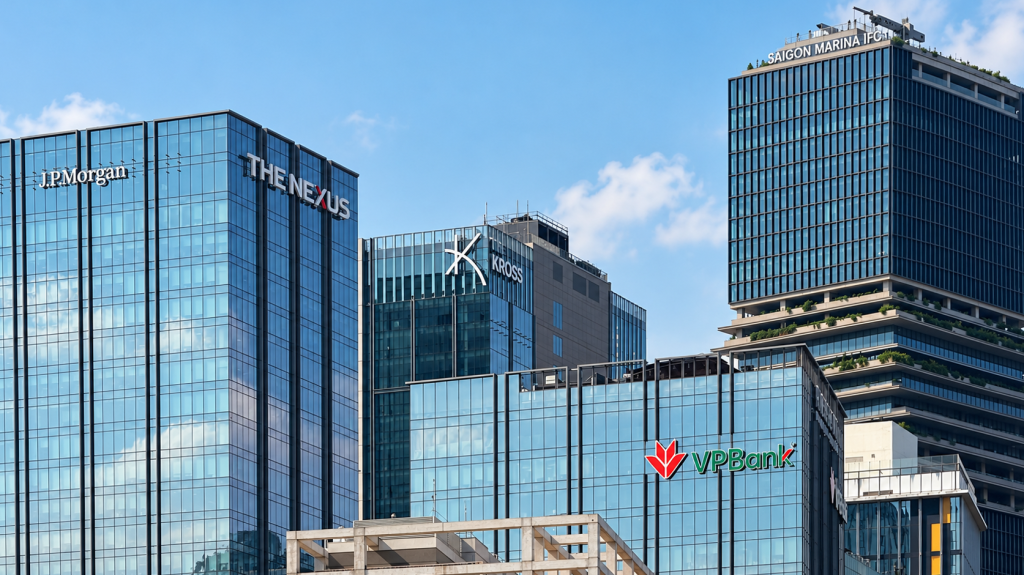
The Kross is a Grade A office building on Ton Duc Thang Street, District 1, Ho Chi Minh City. Businesses searching for office space in the city center can learn more about its location, specifications and leasing opportunities.
Explore The Kross
Learn more about the building, available office space and leasing information to see if The Kross is the right fit for your business.